


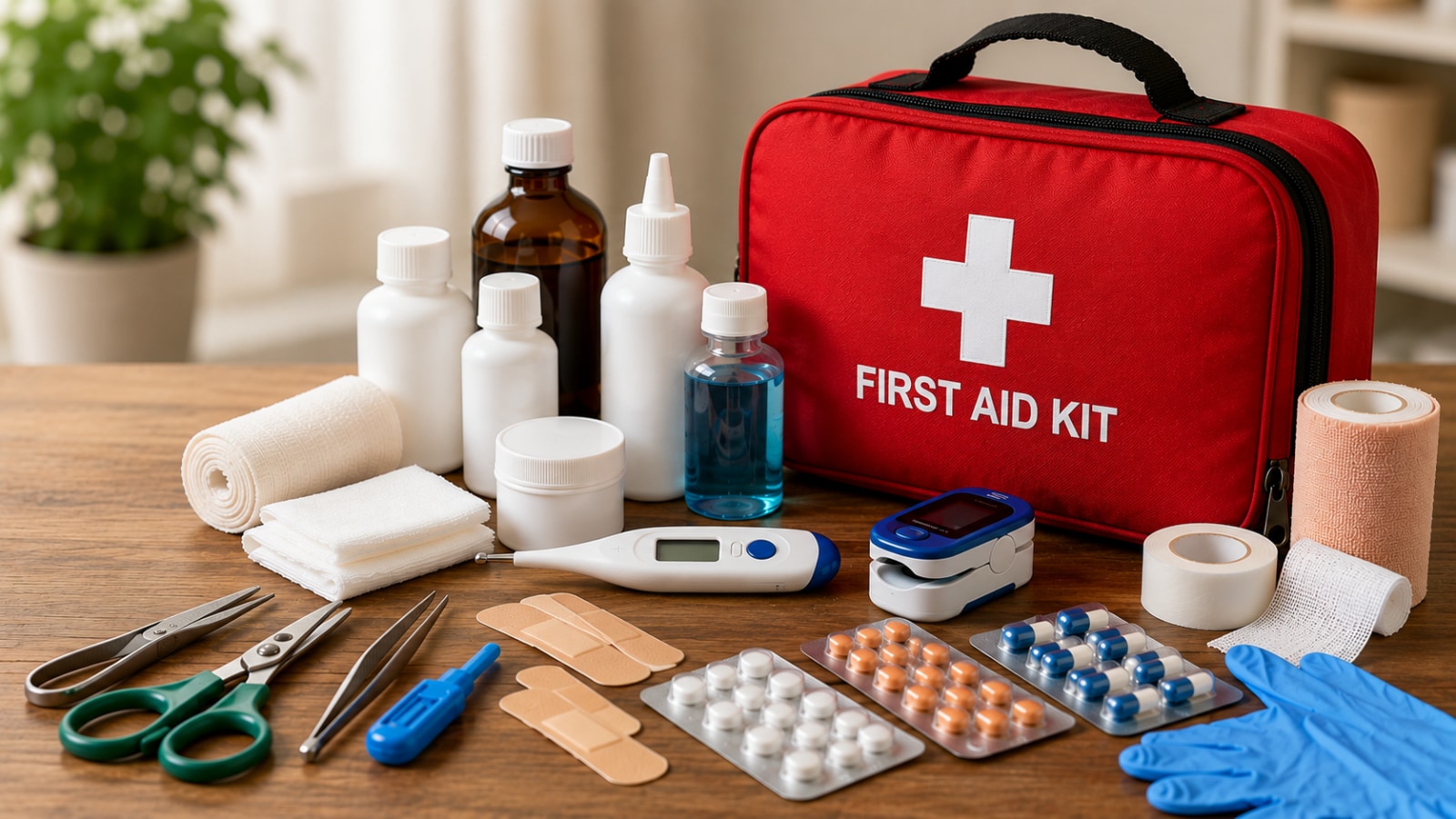
Having a well-stocked medicine cabinet can help you manage minor health problems quickly and comfortably. From headaches and fever to small cuts and seasonal allergies, keeping a few essential medicines and first aid supplies at home can save time and provide temporary relief until medical care is available.
However, it’s equally important to remember that a home medicine kit is not a replacement for professional medical treatment. Serious illnesses, persistent symptoms, or medical emergencies should always be evaluated by a qualified healthcare professional.
This guide explains which basic medicines and supplies are commonly recommended for a home first aid kit and how to store them safely.
Why Is a Home Medicine Kit Important?
Minor illnesses and injuries can happen unexpectedly. Having basic medicines readily available allows you to respond quickly while avoiding unnecessary trips to the pharmacy.
A well-prepared medicine kit can help with:
- Fever and mild pain
- Headaches
- Minor cuts and scrapes
- Seasonal allergies
- Cold and flu symptoms
- Mild digestive discomfort
Keeping essential supplies organized also makes it easier to find what you need during an emergency.
Pain and Fever Relief Medicines
Pain relievers are among the most commonly used medicines in any household.
They may help relieve:
- Headaches
- Muscle aches
- Toothaches
- Mild joint pain
- Fever
Always use these medicines according to the dosage instructions on the label or as directed by a healthcare professional.
Cold and Cough Relief
Seasonal colds are common, especially during changes in weather.
Depending on your symptoms, you may consider keeping:
- Cough medicine
- Throat lozenges
- Saline nasal spray
- Nasal decongestants (if appropriate)
These products may help relieve symptoms but do not cure viral infections.
If symptoms persist for several days or become severe, seek medical advice.
Allergy Medicines
Allergies can develop suddenly and may cause uncomfortable symptoms.
Common allergy symptoms include:
- Sneezing
- Runny nose
- Itchy eyes
- Skin itching
- Mild rashes
Keeping an appropriate allergy medicine at home may help manage occasional symptoms. Always read the product label carefully before use.
Digestive Health Products
Digestive discomfort is another common reason people reach for home medicines.
Useful products may include those intended for:
- Mild heartburn
- Indigestion
- Gas
- Constipation
- Diarrhea
If digestive symptoms are severe, persistent, or accompanied by blood, dehydration, or intense pain, seek medical attention promptly.
Basic First Aid Supplies
A home first aid kit should include more than just medicines.
Consider keeping these essential supplies:
- Adhesive bandages
- Sterile gauze pads
- Medical tape
- Antiseptic solution
- Cotton balls or swabs
- Disposable gloves
- Digital thermometer
- Small scissors
- Tweezers
These items can help manage minor injuries until professional care is available if needed.
Medicines for Children
If you have children at home, only keep medicines that are specifically formulated for their age group.
Never give children medication intended for adults unless instructed by a qualified healthcare professional.
Always:
- Use the correct measuring device.
- Follow age-appropriate dosing instructions.
- Store medicines safely out of children’s reach.
Medicines That Should Not Be Shared
Prescription medicines should never be shared with family members or friends.
This includes medicines prescribed for:
- High blood pressure
- Diabetes
- Antibiotics
- Asthma
- Mental health conditions
- Heart disease
A prescription is based on an individual’s medical history and specific health needs.
How to Store Medicines Safely
Proper storage helps maintain the quality and effectiveness of medicines.
Follow these simple tips:
- Store medicines in a cool, dry place.
- Keep them in their original packaging.
- Protect them from direct sunlight.
- Check expiration dates regularly.
- Keep medicines away from children and pets.
- Avoid storing medicines in humid places unless instructed otherwise.
Organizing medicines by category can also make them easier to find when needed.
When Should You Replace Medicines?
Review your medicine cabinet every few months.
Replace medicines if:
- They have expired.
- The packaging is damaged.
- The label is unreadable.
- The medicine has changed color, smell, or texture.
- Storage instructions were not followed.
Using fresh, properly stored medicines helps ensure they remain effective.
When Should You Visit a Doctor Instead?
A home medicine kit is intended for temporary management of minor conditions.
Seek medical care if:
- Symptoms last longer than expected.
- Fever remains high or returns repeatedly.
- You experience severe pain.
- Difficulty breathing develops.
- A wound is deep or heavily bleeding.
- You suspect a serious infection.
- You have a chronic medical condition that is worsening.
Professional evaluation is important whenever symptoms are severe or do not improve.
Conclusion
Keeping a basic selection of medicines and first aid supplies at home can help you respond quickly to everyday health concerns. Pain relievers, allergy medicines, cold remedies, digestive products, and essential first aid items are useful additions to a well-organized medicine cabinet.
Remember to store medicines correctly, check expiration dates regularly, and never use prescription medicines without medical guidance. A carefully maintained home medicine kit can provide convenience and peace of mind while supporting safe and responsible medicine use.
Medical Disclaimer: This article is for informational purposes only and should not be considered medical advice. Always consult a qualified healthcare professional before taking any medication or treating a medical condition at home.